

As advancements in technology progress, drone surveys have become as a revolutionary tool, changing how we evaluate land and manage projects. These aerial vehicles are not simply a trend; they are revolutionizing various industries, especially in construction, agriculture, and environmental observation. With https://surveyoroxfordshire.co.uk/ to capture high-resolution imagery and gather data in real time, drones are altering the framework of land analysis and project coordination.
There are many important benefits to utilizing drone surveys. Ranging from enhanced precision in topographic mapping to offering safer options for roof evaluations, drones offer innovative solutions that traditional surveying methods often struggle to match. In this article, we will explore 30 compelling reasons to consider drone surveys for your next project, analyze how they are reshaping essential industries, and examine the critical aspects of accuracy, safety, and data integration that make drone technology a vital component of modern land assessment. Whether you identify as a developer, project manager, or environmental researcher, comprehending the abilities of drone surveys could prove to be the transformative factor you have been searching for.
Merits of Drones in Surveying
Drone surveys offer a range of important benefits that distinguish them from traditional surveying methods. First and foremost, the rapidity of data collection with drones is extraordinary. They can map large areas in a small part of the duration it would take for ground-based survey teams, allowing for faster project turnaround. This quick data gathering can accelerate the planning and development processes, making it particularly helpful in dynamic industries like building and realty.
Another significant benefit of drone surveys is the enhanced safety they provide. Drones can access hard-to-reach or dangerous locations without jeopardizing staff. For example, in cases like roof inspections or assessments of infrastructure in inaccessible areas, the use of drones negates the need for scaffolding or climbing gear, significantly reducing the likelihood for accidents and injuries. This feature of drone surveys not only prioritizes worker safety but also leads to more comprehensive assessments of inaccessible sites.
Affordability is another compelling advantage of using drone surveys. By reducing the duration spent on site and minimizing the need for expensive tools or significant labor, projects can see a noticeable reduction in costs. Additionally, drones can obtain a abundance of high-quality data that can be converted into comprehensive 3D models and other valuable outputs, enabling more knowledgeable decision-making without the extensive financial burden associated with traditional surveying methods.
Comparative Assessment: Drone Technology vs. Conventional Mapping
Standard measurement approaches often necessitate significant manpower and duration to collect data from the field. Surveyors typically depend on equipment such as precision instruments, which can be labor-intensive and may take considerable time to wrap up a project, particularly in large or intricate areas. In contrastive , drone-based scans can map expansive terrains swiftly and efficiently, gathering high-resolution photos and data in a small portion of the duration. This efficiency allows for faster decisions and task commencement.
When considering exactness, current drone assessments employ state-of-the-art GPS technology to achieve remarkable accuracy. Based on the equipment used and external conditions, UAVs can achieve precision levels comparable to traditional surveying approaches. However, the capacity of UAVs to collect data from multiple perspectives and elevations can result in more comprehensive datasets that boost the overall quality of the assessment. This is notably advantageous in topographical mapping, where detailed and ongoing coverage is crucial.
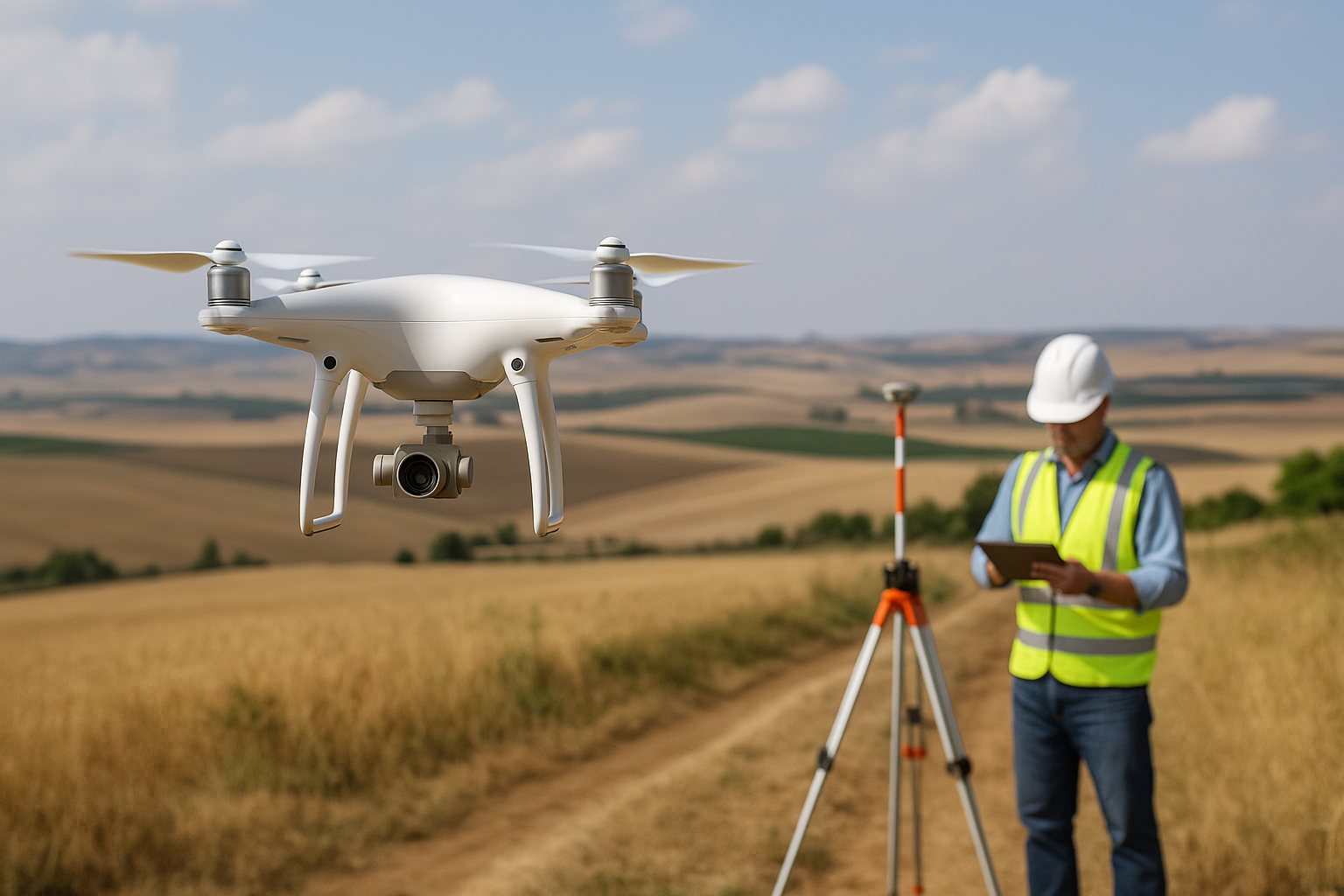
Cost-efficiency is one more area where drones hold a significant edge. Conventional surveying often incurs increased labor costs and extended assignment timelines, escalating expenses. In comparison, UAV-based surveys require a smaller number of workers and can significantly minimize site visit durations. Additionally, the capacity to gather and interpret data rapidly allows teams to distribute resources more efficiently, leading to more cost reductions. In conclusion, drone-based scans offer a convincing case as a modern alternative to traditional surveying, resulting in lower spending and greater effectiveness.
Future Developments in Drone Survey Technology
The prospects of drone survey technology is set for significant advancements, fueled by rapid progress in artificial intelligence and machine learning. These technologies will improve data analysis capabilities, allowing drones to not only obtain high-resolution images but also to interpret and analyze the data in real time. This will enable operators to make informed decisions more quickly, boosting the overall efficiency of surveying processes and reducing delays in project execution.
Another nascent trend is the rise of hybrid drones, which integrate fixed-wing and multi-rotor designs. These drones can cover large areas effectively while also providing the ability to hover and capture high-resolution images of particular sites. This versatility will reshape surveying strategies, allowing professionals to maneuver through diverse terrains and execute tasks that were previously time-consuming and expensive. As a result, we can anticipate more thorough and accurate surveys across various industries.
Moreover, the incorporation of 5G technology will transform drone surveys by enabling faster data transfer and enhancing live streaming capabilities. This advancement will enable surveyors to monitor operations and data in real-time, enhancing collaboration among teams and stakeholders. With faster access to data and images, project planners can adjust their strategies on the fly, leading to better outcomes and greater project success.